
Demo Day at LearnToBot: How Greater Houston Kids Showcase Real Robotics, Coding, and AI Projects
Parents in Greater Houston can see real results at LearnToBot Demo Day, where kids ages 6–18 showcase Arduino robots, Scratch-to-Python coding projects, and AI work they build and take home. Discover why families in The Woodlands, Katy, Cypress, and Sugar Land choose this hands-on STEM program.
Demo Day at LearnToBot: How Greater Houston Kids Showcase Real Robotics, Coding, and AI Projects
Parents searching for the best STEM program in Greater Houston often want more than weekly classes—they want proof that skills stick. LearnToBot’s Demo Day gives families in The Woodlands, Katy, Cypress, and Sugar Land exactly that: a chance to see kids ages 6–18 present the robots, games, and AI projects they actually built and take home.
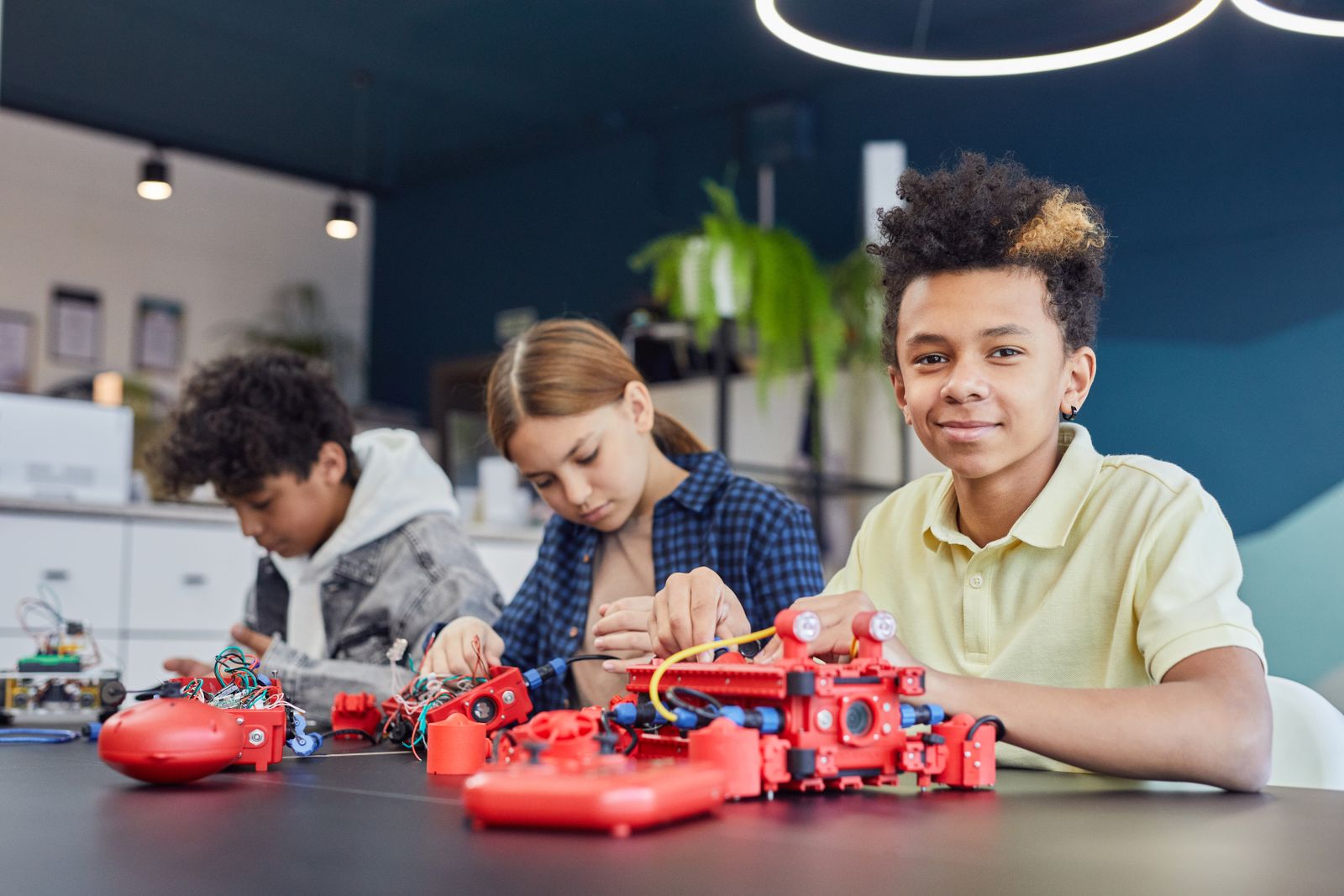
 Kids collaborating on robotics projects
What Happens at a LearnToBot Demo Day
Demo Day is a low-pressure showcase where students walk parents and friends through their latest creations. Younger kids might demonstrate a Scratch-based Car Racing Game or a simple sensor-triggered RC Explorer. Older students often present Python-powered projects such as a Smart Tollway with ultrasonic sensors, a Heavy Lift Crane that uses mechanical principles, or Edge AI experiments with OpenCV for basic computer vision.
Because every child works with real Arduino boards, breadboards, sensors, and motors—and keeps the full kit—the projects on display are functional, not simulated. Families consistently note how confidently students explain wiring diagrams, code logic, and debugging steps. This public practice builds communication skills alongside technical ones.
Why Hands-On Projects Matter More Than Screens Alone
Research on STEM learning consistently shows that combining physical building with coding deepens understanding. When a child programs an ultrasonic sensor to stop a robot or uses a light sensor for line following, abstract concepts become concrete. At LearnToBot, this starts as early as age 6 with block-based Scratch and progresses naturally into real Python for ages 12–18.
The 1:5 instructor-to-student ratio ensures personalized coaching, while unlimited make-ups let busy Houston families keep momentum. Many parents also value the college-portfolio benefit: teens finish with documented projects (code, photos, videos, and hardware) that stand out on applications.
Internal links for more detail:
- Explore the full curriculum and age-based roadmap
- Check weekly class times in The Woodlands, Katy, Cypress, and Sugar Land
- Learn about summer camps where kids build and keep complete kits: Summer Robotics & Coding Camps
How LearnToBot Turns Class Time into Showcase-Ready Work
Instructors guide students through progressive challenges: breadboard circuits, sensor integration, motor control, and eventually AI elements for older groups. Example take-home projects include Custom Controllers for games, obstacle-avoiding RC vehicles, and smart devices that respond to real-world inputs. Because kits go home every week, students continue iterating between classes—exactly what produces polished Demo Day presentations.
School partnerships further extend this model. LearnToBot works with Houston-area schools to bring the same hands-on robotics and coding experience on-site, reinforcing classroom STEM goals with real hardware.
Practical Takeaway for Parents
If your child is curious about robotics classes for kids in Houston or coding classes in The Woodlands or Katy, attend or ask about the next Demo Day. Seeing peers present working Arduino projects, Python code, and even early AI demos removes the guesswork about “what they actually learn.” The combination of small classes, take-home kits, and flexible scheduling makes consistent progress realistic for most families.
Ready to see it in person? Book a free trial class—no experience needed—and your child can start building something they’ll be proud to show off.
For external perspective on the value of project-based STEM, the National Science Foundation highlights how hands-on engineering experiences strengthen problem-solving and persistence in young learners (see their education resources at nsf.gov).