
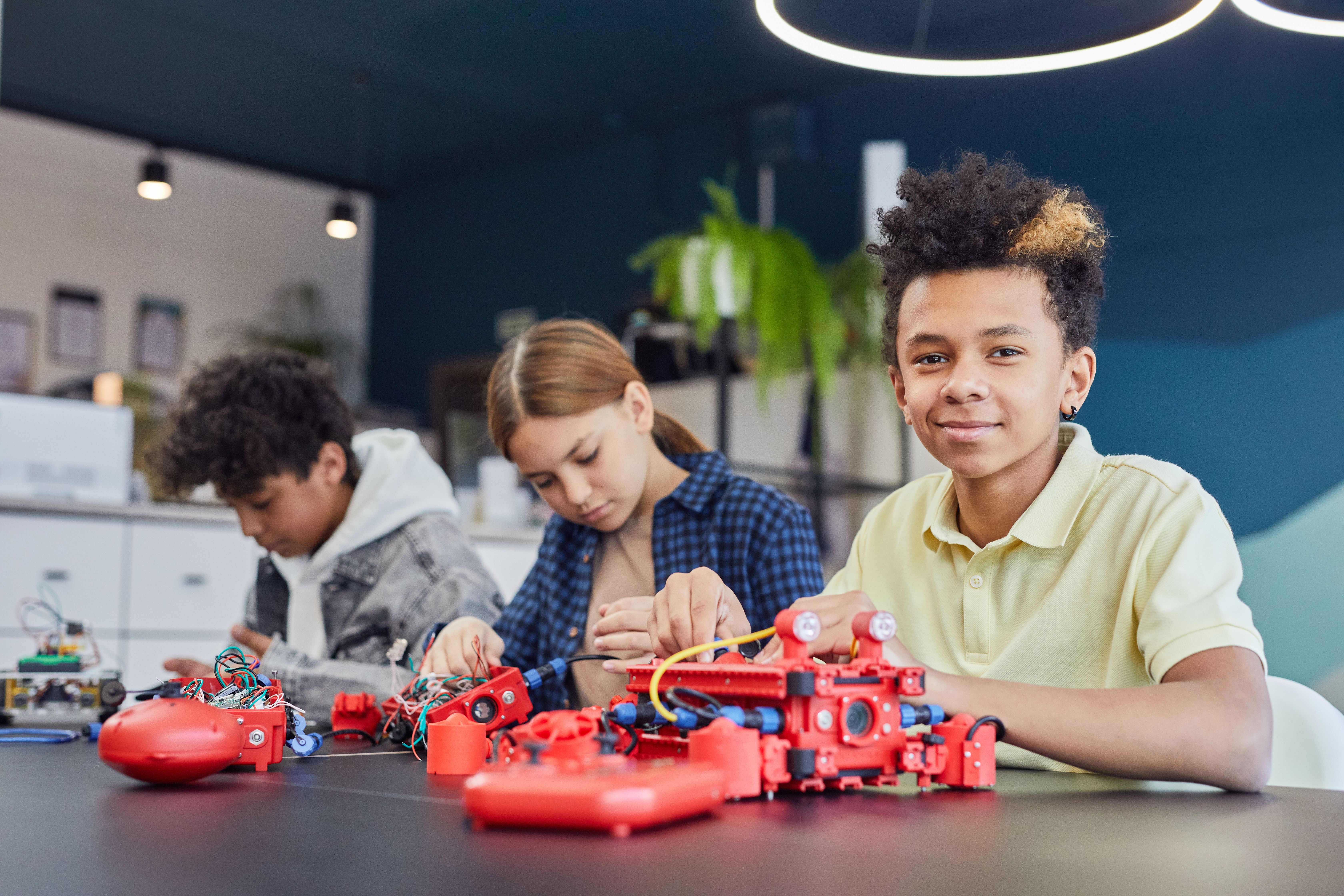
Hands-on AI & Robotics: Preparing Kids for the 2026 Tech World
Discover how hands-on AI and robotics education equips children with critical thinking, problem-solving, and future-ready skills for the tech-driven world of 2026 and beyond. Learn why combining hardware building with coding creates deeper understanding than screens alone.
Why Hands-on AI and Robotics Matter More Than Ever in 2026
The tech world of 2026 is no longer about passive screen time. Artificial intelligence, automation, and intelligent machines are reshaping every industry—from healthcare and manufacturing to everyday home devices. For kids growing up in this era, simply using AI tools is not enough. They need to understand how these systems sense, decide, and act in the physical world.
Hands-on AI and robotics education bridges that gap. When children build a robot, attach sensors, write code that responds to real data, and watch their creation move, they transform abstract concepts into tangible experiences. This approach develops the exact skills the World Economic Forum and education standards bodies highlight as essential for the future workforce.
Why Hardware + Coding Creates Deeper Learning
Building First Makes Code Meaningful
Coding alone can feel like magic on a screen. Adding hardware changes everything. A child who spends ten minutes figuring out why their robot drifts left quickly discovers a loose wheel or misaligned sensor. That moment of noticing teaches cause-and-effect far more effectively than any textbook.
Research in educational robotics consistently shows gains in computational thinking when students design, build, test, and iterate rather than follow fixed steps. The physical feedback loop—write code, observe the robot, debug, improve—mirrors how real engineers and AI practitioners work.
Sensors Turn Abstract AI Concepts Concrete
Modern AI relies on data from sensors. In a hands-on robotics class, kids learn:
- How light, distance, and motion sensors collect real-world inputs
- How those inputs become data that a program (or simple AI model) can use
- Why biased or incomplete data leads to poor decisions
This maps directly to emerging K-12 AI standards (such as the CSTA revisions expected around 2026) that emphasize representation, reasoning, machine learning basics, ethics, and societal impact. Physical computing with microcontrollers, sensors, and robots makes these ideas accessible even to elementary students.
From Consumer to Creator Mindset
Most children interact with AI as consumers—asking chatbots questions or watching recommendation algorithms. Hands-on robotics flips the script. Kids become creators who train simple models, design behaviors, and confront the limitations of their systems. That identity shift builds confidence, equity, and a healthier relationship with technology.
Real-World Takeaways and Skills Kids Develop
Here are the practical benefits parents and educators see when kids engage in hands-on AI and robotics:
- Logical problem-solving and resilience: Debugging a robot that refuses to turn teaches systematic thinking and perseverance.
- Spatial and mechanical intelligence: Working with gears, motors, axles, and structural parts develops fine motor skills and 3D reasoning.
- Data literacy and AI intuition: Collecting sensor data and seeing how models generalize (or fail) demystifies machine learning.
- Teamwork and communication: Most robotics projects are collaborative—kids must share ideas, divide roles, and explain their designs.
- Ethical awareness: Discussing what happens when a robot makes a wrong decision introduces responsibility and bias early.
- Cross-disciplinary application: Math (angles, speed, distance), physics (force, friction), and engineering design come alive in real experiments.
These are not soft skills. They are the foundation for careers in robotics engineering, mechatronics, AI-integrated automation, and countless fields that will dominate the 2030s.
Getting Started: Practical Next Steps
You do not need a university lab to begin. Quality programs combine affordable robotics kits with progressive coding pathways—starting with block-based visual programming for younger learners and moving toward text languages like Python as skills grow.
Look for curricula that emphasize:
- Design → Build → Code → Test → Iterate cycles
- Real sensors and physical outcomes (not pure simulation)
- Age-appropriate introduction to AI concepts such as training data and feedback loops
- Reflection on ethics and real-world impact
At LearnToBot, we design exactly this kind of experience: custom hardware kits paired with an interactive coding curriculum that keeps learning engaging and rewarding while building genuine understanding.
Watch and Learn
For a clear, engaging introduction to how robots sense, plan, and act, watch this excellent educational overview:
Key References and Further Reading
- Forward Education (2026). Why Hands-On AI Literacy Is the Future of K-12 Education – on physical computing and CSTA AI priority areas.
- World Economic Forum Future of Jobs reports – highlighting AI, robotics, and data skills as high-demand areas through 2030.
- Reviews of K-12 educational robotics studies showing consistent gains in computational thinking when programs emphasize design and iteration.
- Emerging CSTA K-12 Computer Science Standards revisions incorporating AI learning priorities.
Conclusion: Prepare Kids to Shape the Tech World, Not Just Live in It
The children of 2026 will inherit a world where AI and robots are partners in work, creativity, and daily life. Hands-on education that combines hardware building with thoughtful coding gives them the tools to understand, question, improve, and innovate with these technologies.
Start early. Keep it physical. Make it playful. The skills they build today—curiosity, resilience, systems thinking, and ethical awareness—will serve them far beyond any single career path.
Ready to explore? Discover LearnToBot’s robotics and coding programs designed specifically for kids who want to build the future with their own hands.